
A Letter To My Future Self
Dear Cory,
Hello from the immediate aftermath of the Peace Corps. I hope you’re doing well and enjoying whatever crazy endeavors you’ve managed to get yourself into since I wrote this. Finding new and interesting things to occupy your time has never really been a problem for you, but as I sit here with another blank page of my life ready to be filled in, decisions about how to spend that time are becoming more difficult. There are no more mulligans. No more paths that lead back to the main trail, only opportunities for regret and sacrifice is now a requirement for any decision. More and more I wish I had a deeper recollection of how I felt during certain periods of my life and what I envisioned for myself when I made certain decisions. So really I’m writing this letter because while your experience in the Peace Corps will remain in some way a part of you forever, my fear is that the actual memories and emotions involved will fade and in their place will be some romanticized version of them. This letter will hopefully serve to remind you what your service was really like and how you truly felt while in Ghana to help you make life decisions in the future.

Fortunately, I’m still close enough now to when I joined that I still remember the excitement I had making that decision. Few times in my life have I ever been so sure of something that required such a long and serious commitment. At the time it felt like the culmination of a decade in my life that revolved around change and self-improvement. I never would have been able to tackle this challenge in my early 20’s and the Peace Corps felt like the perfect thing to test myself while truly committing myself to improve. I was excited about the opportunity to open up new chambers in my mind and alter my perspective. And I also absolutely knew how challenging it would be to the point that I was enthusiastic about that too. From my first blog post, written a month before I left:
If this won't be one of the most difficult challenges of my life then ... well, then I guess I need to improve that much more to be able to handle it. … And given my belief that we make the largest improvements when faced with difficult environments, [Peace Corps] seemed like a natural choice.
I have since regretted this notion a bit not because I was wrong or it wasn’t true (or for that matter, the grammatical errors), but because it meant that before I even stepped foot in Ghana I believed it would be overwhelmingly difficult and that became a self-fulfilling prophecy. It was never going to be easy, but I think as a result of knowing this fact, my attitude was, at times, unnecessarily sour.
Regardless, I’m happy to say Peace Corps was generally what I expected. It was eye-opening and inspiring while being tough to the point of nearly breaking me. Some of the happiest and equally most difficult moments of my life came in those two-plus years.
I don’t think I’m worried about you forgetting those things though. I am, however, concerned that you’ll forget what made it so hard. That over time you’ll start to forget how much you struggled and learned about your weaknesses in ways you didn’t expect. You’ll stick to individual memories and start to define your experience around them. However, the thing about the Peace Corps is there are no “ah ha” moments. No fully encapsulating anecdotes. Individual memories will only serve to narrow an experience that was completely indefinable. It was a grind, day in and day out. You measured wins not in projects or accomplishments but in minutes and hours. You learned something new about the culture. Win. You wrote a good blog post. Win. You made it out of your house that day. WIN.
I also want you to remember is that by in large you were unhappy. I wish it were’t the case. I wanted so badly to be one of the volunteers who were just made to do that kind of work. Who could on a daily basis recognize how lucky they were to have such an incredible opportunity, which it absolutely what it was. I tried, and usually failed, to be the volunteer that so many people at home thought I was. But most of the times, I couldn't be that person and I struggled.

There were definitely moments of happiness and inspiration and fulfillment. But the majority of the time I was lonely and I was sad and, perhaps worst of all, I was bored. Looking back now, I think I provided value to my community during my service. But while I was in Ghana I couldn’t – on a daily or even weekly basis – be productive or make steps towards accomplishing my goals, which is something I’d never experienced before. I have definitely failed at things in life but I had never before felt like I was incapable of succeeding.
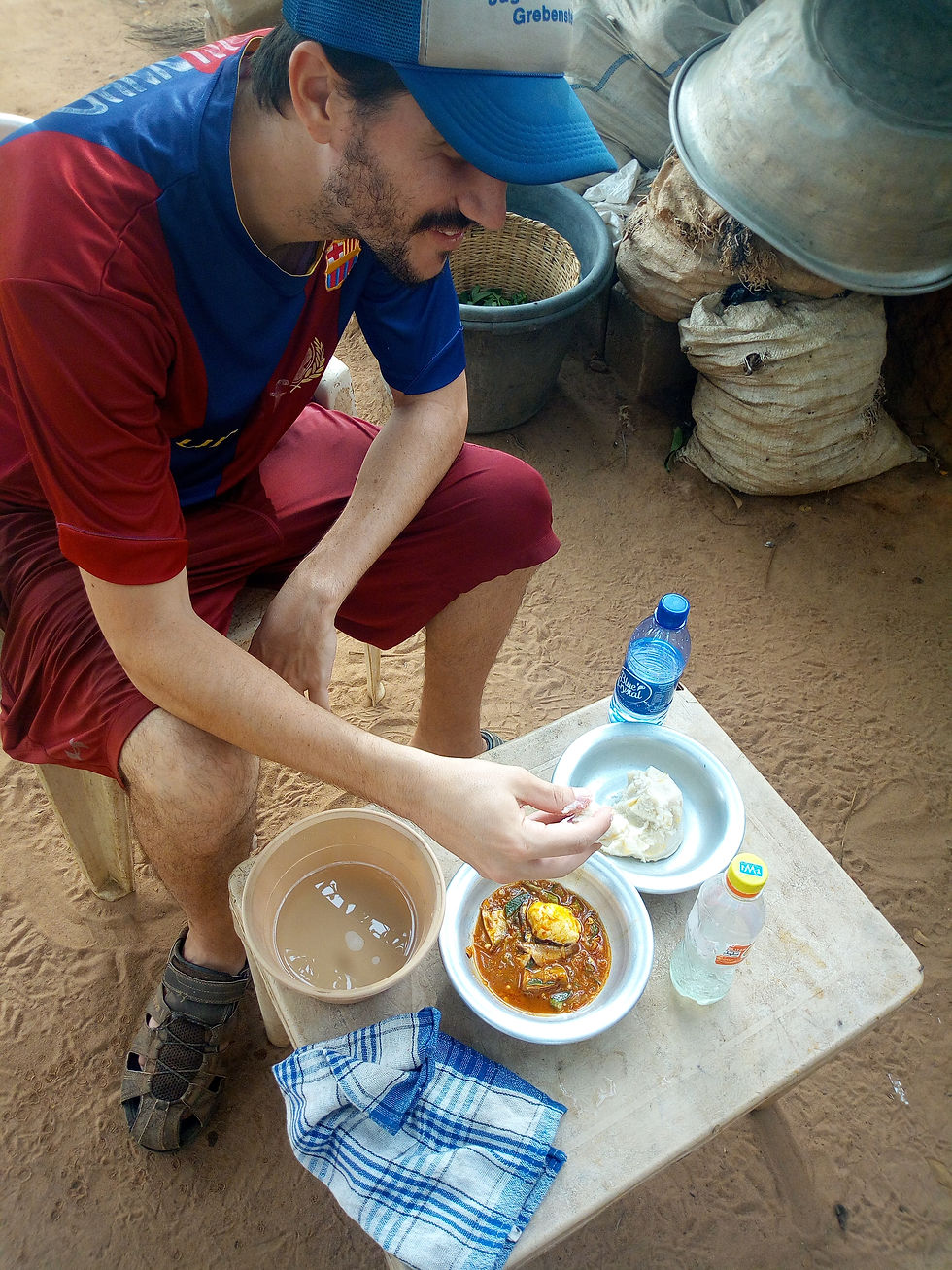
And I’m not just referring to creating successful agric-related projects and goals. While this part was definitely a struggle, I was probably above-average in this category and I think I did good development work when it was provided to me. But I was below-average in an equally important aspect, integration. I thought this would be a strength of mine. I’ve generally been able to make friends in any kind of setting and pride myself on being able to work with any personality type. But for some reason I just couldn’t seem to make deep connections with my Ghanaian peers. It didn’t help that I struggled to regularly eat the local food and the local language was difficult to learn past a basic level. And while I consciously understood their culture was just “different” and not “wrong”, it didn’t make me any less frustrated trying to navigate it. Frustration grew to anger, not at Ghanaians but at myself for not being the person I saw other volunteers becoming naturally. Over time, I grew depressed, in part, because I wasn’t good at integrating and my integration suffered because I was depressed.
These are common feelings for Peace Corps Volunteers, even for ones more suited to the lifestyle and even for ones that extend their service. Everyone has their own struggles and the Peace Corps trains us on how to cope and the realities of our new life. Experiences and subsequent emotions became part of the regular conversations among my American friends. They were just facts of being a volunteer. If it wasn’t the lack of work, it was the harassment. If it wasn’t the harassment, it was the homesickness. If it wasn’t the homesickness it was the actual sickness. And if all of that didn’t wasn’t enough, the Peace Corps has a way of exposing your shortcomings as a person. It will break you down in one way or another and in those moments force you to confront yourself in ways you’d prefer not to. For me, I couldn’t deal with people treating me special because I was from America. I couldn’t cope with the heat and exhaustion. And I couldn’t handle the absence of productivity in my life. It all made me easily irritated, often emotional and regularly sad.
In the end, one of the most important things I gained from this experience was learning to forgive myself for what I am not and for the areas in which I’ve yet to improve. I can’t be other people and I can’t expect my self-improvement journey to be over yet. I joined the Peace Corps because I thought I was ready to put a cap on this stage of my life. But forced to face my flaws every day made me realize that having areas I need to improve is okay and I can’t beat myself up over them. It was the only way I could get through my service without going crazy. Recognizing the areas in myself that I need to improve continues to drive me but because of this experience I’m better at accepting them and not let them drag me down.
I'm also better at appreciating my strengths because through that darkness it made the good moments that much more special. It made my progress that much more fulfilling. For every time I cried, for every time I questioned my purpose there, for every time I wanted to go home, I live knowing that I didn’t quit. Through all my faults and sadness, I kept trying. I started worthwhile projects without giving in to the financial and cultural pressures associated with them. I taught in the schools and did my best to influence my communities’ young leaders. I was integral to the preparations for two GLOW BRO camps. I created the first Peace Corps Hackathon, which produced real products that are in development and will result in more Hackathons (the next one will be run in Ghana in a couple of months and I’m told other countries are planning their own). And, every once in a while, I found a small new way to integrate. I would be proud of what me, my community and my fellow PCVs accomplished if conditions for this work had been easy, but I’m especially proud of them because they were hard.

I'm not sure if or how this letter will help you years from now. I'm not sure what decisions you will have to make or where your life will go but I know that whatever life throws at you, it's important that you take the right lessons from your Peace Corps experience. This letter is a reminder that you can't view your time in Ghana with any one word like “positive” or “negative”, “depressing” or “fulfilling”, “energizing” or “maddening”. Like most things in life, it was complex. Any of those words would fit in its own way and yet fail entirely to capture the entire experience on its own. Your time in the Peace Corps can’t be explained in a word, or a paragraph, or a blog post.
Sincerely,
Yourself circa 2019
Comments