
Thinking About Privilege

Any American who has spent time in Ghana has invariably been asked by someone, “Take me to America!” This presents an immediate challenge because the unfortunate reality is that most Ghanaians will live their whole life longing for the “American Dream” with that desire going unfulfilled. The visa application and approval process is strict and competitive. Even qualified candidates have to win a lottery to obtain their visa. So when someone approaches you and says this, especially someone you’re close with, it’s an extremely difficult thing to handle, both directly with the individual and later when you’re wrestling with your own thoughts.
And the privileges of a volunteer don't end there. While being able to return to the U.S. at any time is perhaps the most valuable privilege we have, it’s just one thing on a very long list. High-quality health care, a monthly stipend for food and travel, and free room and board with strict minimum requirements for security and health purposes are just a few others. Without them, the Peace Corps couldn’t recruit as many qualified volunteers and our services wouldn’t be as valuable, so they serve an important purpose. But how can a volunteer rationalize this on a day to day basis? When presented with someone who wants to go to America, how do you respond? How do you justify it? Aren’t I here to help bridge the gaps in our inequality, not highlight them? These are really difficult questions to answer and it’s something I spend a considerable amount of time thinking about. I wish I had answers for you in this blog post, but I don't. Instead, I simply hope to start the conversation.

Let’s start here: There is a popularly held belief in America that your successes are a product of how hard you work. In my generation especially we were told that we could achieve anything we put our minds to. Never mentioned are all of the advantages and all of the luck that is necessary to even have a chance at accomplishing our goals, no matter what those goals may be. Want to be a professional basketball player? I hope you're tall and fast. Want to be an astronaut? I hope you're really smart. Want to be a model? I hope you're attractive. Luck, in this case being defined as something you benefited from but had no control over, is extremely important in almost anything you want to do or achieve.
There are the obvious privileges that require luck. Not being born with or later acquiring a debilitating disability or disease. Having the right skin color, gender and figure. Being born into a family with money. But I contend there are less obvious but equally important things as well. Being naturally gifted at a certain subject. Getting raised in an environment that is conducive for nurturing good habits while killing bad ones. Having the right to an American passport upon birth.
I’m sure someone reading this is shaking their head, saying something like, “But there’s no substitute for hard work and that’s not luck. Hard work is more valuable and a greater indicator of success than any of the things you just listed.” Perhaps. And for the sake of argument, I’ll agree with you. But consider this, unknown argumentative reader: We know that one's intelligence is 50% hereditary (or more). That's luck - you have zero control over your genes. We also know that intelligence is a powerful predictor, perhaps the MOST powerful predictor, of socio-economic success. If we can therefor agree that there is at least some “luck” involved in being successful, let’s also agree that the same be said for people who lack success. At this point, it's not a stretch to project this intelligence onto parenting, education, learned skills and a million other unknown and immeasurable environmental factors that ultimately effect drive, including intelligence itself.
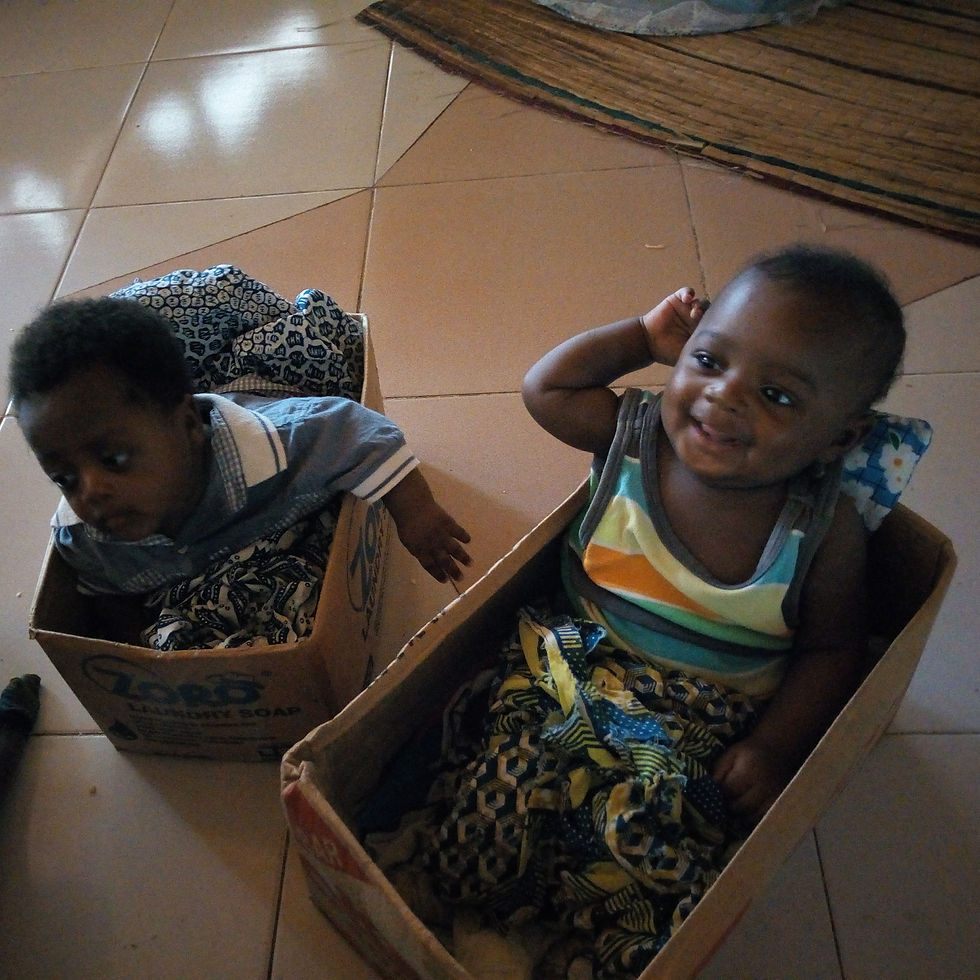
I never thought I could summarize in three paragraphs why I’m a liberal at heart, but I think that’s the closest I will ever get. The point is that nothing great is achieved without luck and no one is impoverished and unmotivated without being unlucky to some scale. Those who are successful owe something to those who aren't because there was some element of luck in their achievements.
What does this have to do with privilege? Despite how it might sound, I'm not advocating for an open border policy or saying we should all become strict altruists. I’m suggesting we embrace the luck and embrace the privilege in the name of balancing the ledger. One individual may be gifted at math while the man or woman next to them is strong and athletic. Should neither take advantage of their privilege to achieve their goals in the name of equality? Of course not. But what I do believe is that the goals need to change. Imagine a third individual who has neither of these gifts, nor one of their own. It should be within the goals of the first two people to help the unfortunate person since they will likely struggle to achieve the same heights through no fault of their own.

When I was a senior at Elon University studying business, I had a great professor for my capstone class. This professor happened to be a black man teaching at a school craving diversity despite a mostly white faculty. He told us that he made sure his bosses knew this fact as a way of providing himself with job security. I’ve never forgotten this lesson. He took something that has traditionally been a disadvantage in our society, turned it into an advantage and didn’t apologize for using his new found privilege. To be clear, he never said that this advantage was right or that it should be a privilege he enjoyed. He was responding to his environment in a way that allowed him to use what he had for his own goals.
Equally, I am using my U.S. citizenship, my healthy body, my intellectual skills, my support system of friends and family, the values instilled in me by my parents, and all of the other privileges I’ve had throughout my life to their fullest extent. My goals include starting my own business, raising children and helping the less fortunate in a meaningful way.
Will I think about all of this the next time I tell someone what it’s like to fly on a plane? Or the next time I explain to a kid what snow is like? Probably not. My mind will continue to keep my heart from breaking at the cost of another small piece of my soul until I finally return to the U.S. and forget about it. But perhaps I can take some small solace lying in bed at night knowing that I have started to shift my goals in the right direction and for now that's enough.
Comments